
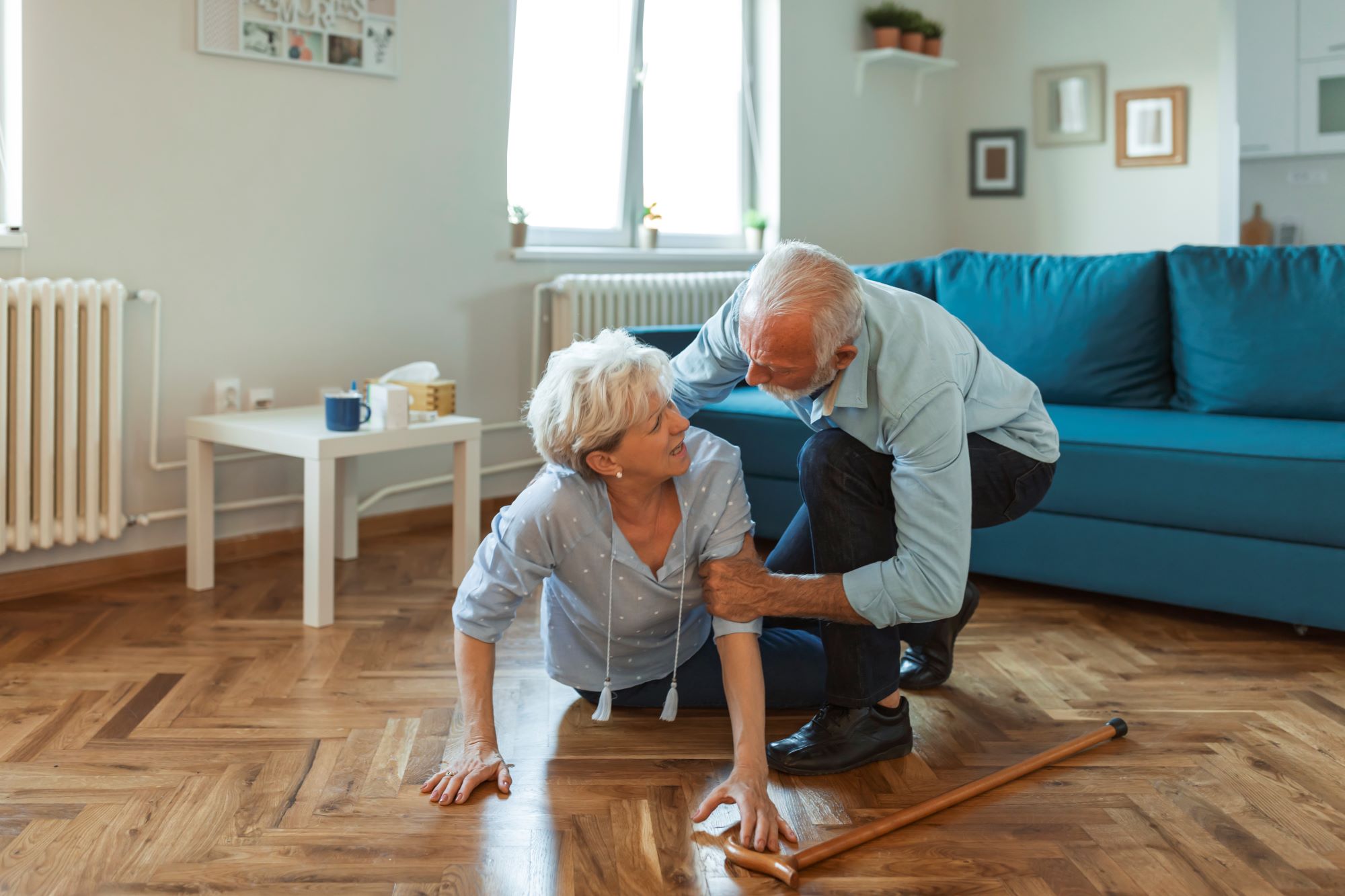
For older adults, a fall can have devastating consequences that go beyond physical injuries.
As we age, our bodies become less resilient, and recovery from even minor injuries becomes challenging.
Falls are a leading cause of injury among older adults and can lead to significant physical, emotional, and social repercussions.
The consequences of falls can have significant implications for someone being able to remain living independently in their own home.
However, the good news is that many falls are preventable with the right strategies.
The immediate impact of a fall
Fractures and injuries
Approximately 10% of falls result in a serious injury, most commonly fractures.
Hip fractures in particular often require surgery and lengthy recovery periods.
Injuries can severely limit mobility and independence, putting at risk the ability to continue to live independently.
Hospitalisation
Falls often require hospital stays.
Any period of hospitalisation weakens the body and reduces cardiovascular fitness, which contributes to falls risk.
The longer the period of hospitalisation, the greater the deconditioning effect it has on the body.
Emotional and psychological impact
Fear of falling
Loss of confidence after a fall is common amongst older adults and can lead to a fear of falling.
This fear of falling often results in a reduction in everyday activities and a more sedentary lifestyle.
This in turn contributes to a loss of strength and balance, increasing the falls risk further.
Loss of independence
A fall-induced injury can make it harder to perform daily tasks, leading to reliance on caregivers or assistive devices.
This loss of independence can affect mental health and self-esteem.
Social isolation
Fear or physical limitations may prevent older adults from participating in social activities, increasing loneliness and affecting mental wellbeing.
Strategies for falls prevention
Although falls can have far-reaching consequences, they are not an inevitable part of ageing.
Here are some ways to reduce the risk of falls:
1. Improve home safety
- Remove tripping hazards: Declutter floors, secure loose rugs, remove cords, and minimise furniture that obstructs pathways.
- Adequate lighting: Ensure all areas, especially stairs and hallways, are well-lit to reduce the risk of tripping in dim conditions. Consider nightlights for bathrooms and bedrooms.
- Install grab bars: Place sturdy grab bars in high-risk areas, such as bathrooms near toilets, bathtubs, and showers.
- Use non-slip mats: Place anti-slip mats in areas prone to moisture, such as the kitchen and bathroom.
2. Engage in strength and balance exercises
- Stay active: Regular physical activity, such as walking, Pilates, hydrotherapy or swimming can strengthen muscles and improve coordination, making falls less likely.
- Specialised exercises: Balance-focused routines, like Tai Chi, can be particularly effective for older adults to enhance stability.
- Seek help: An allied health professional, like a physiotherapist or exercise physiologist, can design tailored exercise plans to strengthen weak areas and improve movement patterns.
Resistance training and combating sarcopenia
Age-related muscle loss, known as sarcopenia, can greatly weaken physical strength and increase fall risk.
Resistance training (using weights, resistance bands, or body weight) plays a crucial role in combating sarcopenia by rebuilding and maintaining muscle mass.
Strong muscles enhance overall stability and make day-to-day activities safer to perform.
Working with a physiotherapist or personal trainer familiar with senior fitness can ensure resistance training is safe, effective, and tailored to individual needs.
3. Use assistive devices
- Walking aids: If balance is a concern, consider using a cane, walker, or rollator. Ensure the device is properly adjusted to the user’s height.
- Non-slip footwear: Encourage wearing shoes with good grip and support, and avoid loose slippers or walking barefoot.
- Other tools: For individuals with vision impairment, magnifiers, glasses with updated prescriptions, and better lighting can help reduce falls caused by poor visibility.
4. Gain confidence with education
- Fall prevention programs: Many community organisations offer fall prevention workshops. Consider joining sessions led by experts who can teach balancing techniques and educate about hazards.
- Post-fall recovery planning: For older adults recovering from a fall, counselling and education can help them regain confidence and prevent future falls.
FAQs about falls and prevention
Falls are the leading cause of injury-related hospitalisations among older adults, with nearly 1 in 3 individuals over 65 experiencing a fall every year. Proactive prevention represents a significant opportunity to reduce risk.
Start by assessing their home environment to minimise hazards, encourage regular physical activity, and schedule routine medical check-ups. Consulting an occupational therapist can also provide additional insight into their specific needs.
Yes! Guided exercises tailored to an individual’s ability level can help improve their mobility and reduce fall risk. Allied health professionals can supervise and ensure safety during movement-based activities.
Not necessarily. Instead, ensure stairs are well-lit, free of clutter, and equipped with sturdy handrails on both sides. Encourage the use of railings when ascending or descending stairs.
Yes! Smart technology, such as fall detection systems, wearable alert devices, and motion-activated lighting, can be an excellent addition for fall prevention and prompt assistance in the event of an incident.
Falls have a significant and lasting impact on older adults, from physical injuries to emotional fears and social isolation.
However, they are not inevitable.
By identifying risk factors and taking preventative measures, older adults can maintain their independence, boost their confidence, and stay safe at home and within their communities.
If you or a loved one is concerned about falls risk, or if you have experienced a fall recently, please get in touch.
Our experienced team can come to you to create a personalised exercise plan, identify safety hazards, and review or provide guidance around mobility aids or support accessories to help keep you feeling safe and confident in your mobility.
References
- Injury in Australia: Falls – Australian Institute of Health and Welfare
- Falls Awareness month – Aged Care Quality and Safety Commission
Get Lifecare Homecare support for your client
For Client Management
MAKE A REFERRAL For Patients
Book appointment
For Patients
Book appointment
Check to see if your area is supported
Learn more about Lorem ipsum dolor sit amet, consectetur adipiscing elit. Donec imperdiet cursus nibh, eu dignissim lectus maximus sit amet.