


hWhen mobility becomes a challenge, finding the right walking aid can either greatly help or hinder day-to-day life.
For those recovering from an injury, living with a chronic condition, or managing age-related changes, mobility aids are invaluable tools.
However, selecting the right one isn’t always straightforward.
These are some tips, which you can also discuss with your allied health professional.
Why choosing the right mobility aid matters
Mobility aids are designed to provide support, reduce the risk of falls, alleviate pain, and restore independence.
However, proper selection and use are critical.
An improper fit, lack of training, or choosing the wrong type of aid can compromise the user’s safety and even worsen certain conditions.
Understanding walking aid options
Below are some common mobility aids that may be recommended based on individual assessments:
Canes
Who it’s for: Those with mild balance issues or minor weaknesses.
An allied health professional can ensure the cane is adjusted to the correct height, preventing slouching or strain.
They can help determine whether a standard cane, quad cane (for extra stability), or one with an ergonomic grip is appropriate for the persons needs.
Training is provided on safe use, especially for navigating stairs or uneven surfaces.
Crutches
Who it’s for: Individuals recovering from leg or foot injuries, requiring weight offloading for short or extended periods.
Crutches can be tricky to use without guidance.
A professional can provide hands-on instruction, ensuring people learn proper positioning to avoid strain on their hands, wrists, or underarms.
It’s also worth discussing whether underarm crutches or forearm crutches (better for long-term use) are most suitable.
Walkers
Who it’s for: Those who require significant balance and weight-bearing support.
Walkers come in many forms—standard (without wheels), wheeled (rollators), seated, or knee walkers for specific injuries.
An allied health professional can help to explain the differences, adjust the walker for the right height, and offer exercises to build coordination.
They will also take into account the intended use – inside versus outside.
Wheelchairs
Who it’s for: Individuals with limited lower-body mobility or significant physical limitations.
Occupational Therapists can help people assess whether a manual or powered wheelchair is ideal for their needs and lifestyle.
They assist with adequate adjustments for seat height, armrest positioning, and ensuring smooth mobility indoors and outdoors.
How a physiotherapist can help
Choosing a walking aid might seem simple, but it’s often a complex process influenced by a variety of factors—physical condition, personal preferences, home layout, and even emotional readiness to use a mobility device.
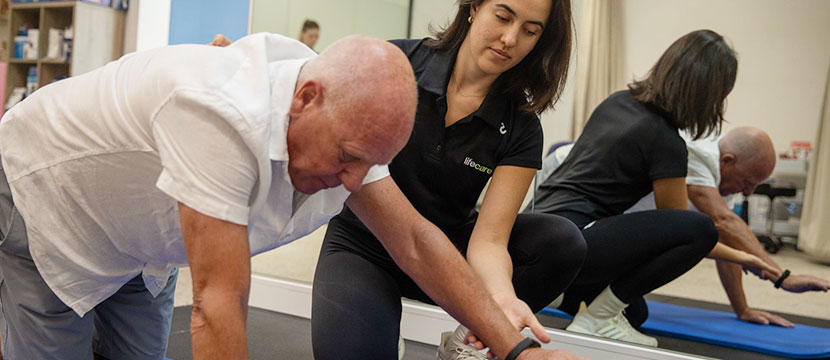
This is where homecare physiotherapists can help: by taking a holistic approach to mobility.
1. Comprehensive assessments
Physiotherapists begin with a thorough evaluation of an individual’s physical abilities, balance, strength, and posture.
They ask about lifestyle and routines, observing how mobility may impact daily activities like walking on uneven surfaces, climbing stairs, or standing for long periods.
For instance, those with small living spaces may require a compact walker, while those who frequently go outdoors might benefit from a rollator with large wheels for navigating uneven terrain.
2. Personalised recommendations
There’s no one-size-fits-all approach to walking aids.
If necessary, an individual might be presented with multiple options for trial.
Some may initially find a cane more accessible but might eventually transition to a walker or wheelchair for greater support.
3. Proper fit and ergonomics
An ill-fitting walking aid can lead to further issues, including poor posture, joint pain, or strain.
Physiotherapists ensure that all devices are adjusted correctly, such as setting the height of a cane or walker to encourage upright walking with minimal strain on the arms and back.
4. Training and technique
Learning how to properly use a walking aid is just as important as selecting the right one.
Physiotherapists provide hands-on training, ensuring clients feel confident.
They demonstrate how to safely navigate stairs, enter or exit doorways, and transition between sitting and standing.
Tips on effective use—such as the sequence of steps when using crutches—are a key part of training.
5. Home safety and integration
Homecare physiotherapists go a step further by assessing the client’s living environment, ensuring walking aids can function safely within the home.
Suggestions may include removing rugs to reduce tripping hazards or rearranging furniture to create clear walking paths.
6. Follow-up and adjustments
Mobility needs can evolve over time, whether as a temporary improvement or as part of a progressive condition.
Physiotherapists provide ongoing evaluations to adjust devices or recommend new aids as needed.
They remain a consistent resource for clients on their mobility journey.
Key considerations in selecting a walking aid
Some of the main factors that can be evaluated when recommending a walking aid include the following:
- Mobility requirements: Does the individual need occasional balance support or full weight bearing?
- Strength and endurance: Can they lift and manoeuvre the device comfortably or maintain stamina for extended use?
- Living environment: Is the device compatible with the client’s daily settings, such as tight indoor spaces or outdoor terrain?
- Portability: For clients who travel frequently, folding or compact aids may be prioritised.
- Client preferences: Comfort, ease of use, and emotional readiness all play a role.
- Long-term use: For some, walking aids may be a temporary solution; for others, they’re a long-term tool that may need upgrades or adjustments over time.
One step at a time…
Walking aids are more than just tools for mobility—they represent independence, and confidence for countless individuals around the world.
By selecting the right walking aid and using it appropriately, you can continue to live life on your terms.
Get Lifecare Homecare support for your client
For Client Management
MAKE A REFERRAL For Patients
Book appointment
For Patients
Book appointment
Check to see if your area is supported
Learn more about Lorem ipsum dolor sit amet, consectetur adipiscing elit. Donec imperdiet cursus nibh, eu dignissim lectus maximus sit amet.